
With temperatures already starting to climb this year, it is important to start paying
closer attention to hydration. There are so many hydration products on the
market, such as drink mixes, supplements, & food products, that are marketed to support
hydration and performance due to their electrolyte content. While that sounds
appealing, there is still a lot of confusion about what electrolytes actually are and how
they support hydration. With so many electrolyte and hydration products to choose from,
it is important to understand what electrolytes are, when they are useful, when they may
not be necessary, and how to choose wisely.
Electrolytes are naturally occurring minerals such as sodium, potassium, magnesium,
calcium, and chloride. When dissolved in fluid, they carry a tiny electrical
charge, hence the name electrolytes, that helps regulate fluid balance and support
vital functions like nerve signaling, muscle contraction, and heart rhythm. Because
water naturally follows electrolytes, especially sodium, they play an important role in
hydration by helping direct where fluid goes in the body and how much stays inside or
outside the cells. That is why hydration is not just about drinking enough water, but is
also about having the right balance of fluid and minerals so your body can actually use
that water well.
For the average person, daily electrolyte needs are met through balanced meals,
snacks, and fluid intake. But there are times when the body may need more support,
such as during long workouts (2+ hours), heavy sweating, hot weather, or fluid losses
from persistent vomiting or diarrhea. In those situations, electrolyte products are a great
option as they help replenish what has been lost – especially sodium, which is lost in the
highest amounts through sweat and plays a big role in helping the body retain fluid.
Keep in mind – doing light activity in normal temperatures typically does not require
additional electrolyte supplementation if you are already properly hydrated.
Using electrolyte products too often or in large amounts can push sodium intake higher
than necessary which may not be ideal for everyone, especially those with cardiac
conditions or those who take medications that impact potassium. It is important to be
attentive to exercise intensity, temperature, sweat & general fluid loss in order to
consume the appropriate level of fluid. Below is a simple guide for popular electrolyte
products – and which is best for certain circumstances.
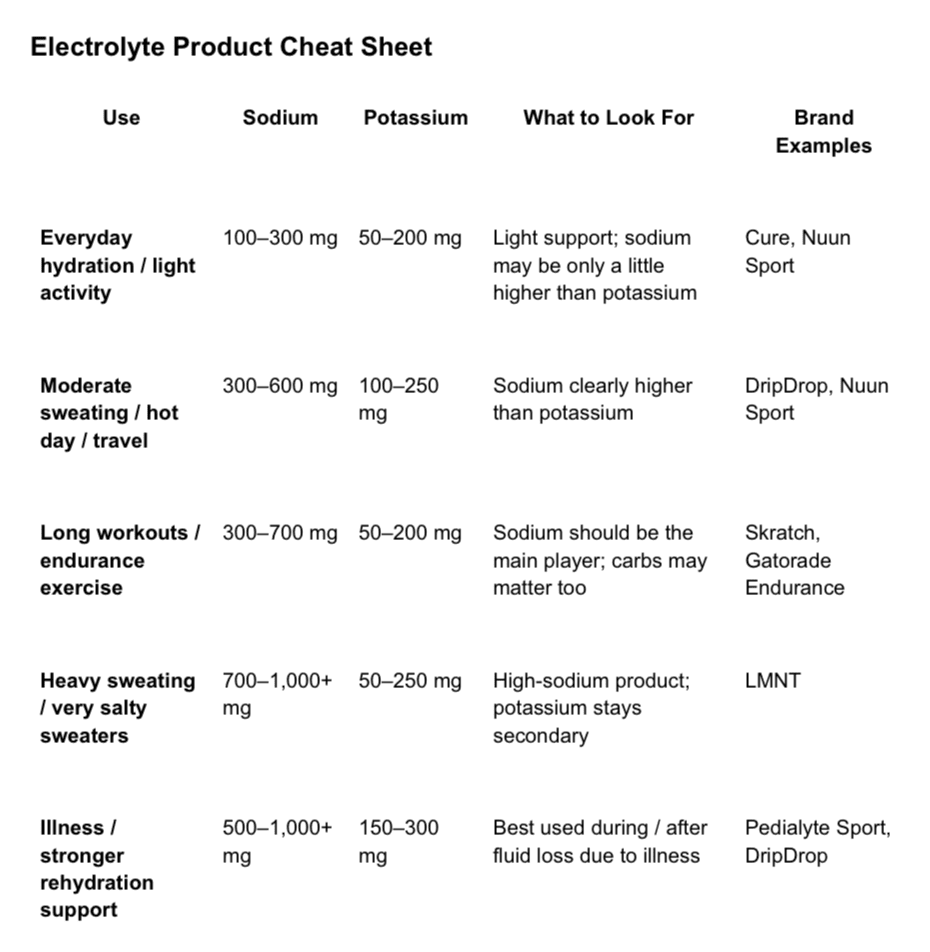
The biggest thing to remember is that for most electrolyte drinks, sodium should
usually be higher than potassium, especially if the intention is to replenish fluid after
sweating, exercise, or heat. That is because sweat contains much more sodium than
potassium, and research on proper rehydration points to sodium as the main electrolyte
to prioritize.
-Alex Grbcich, MS, RD, LD, CPT


Comments
BE THE FIRST TO WRITE A COMMENT